Episode Transcript
[00:00:00] Speaker A: Well, end to end of life. You're right. I'm glad you brought that up because that's really important, I think for brands when they're choosing a sustainable package, just exactly what is the messaging that they want to give? And most of them want to land on the widest end of life destination possible.
[00:00:17] Speaker B: Yeah, and it's designing for entropy, designing.
[00:00:20] Speaker A: For escape, thanks to the advancing technology, which is light speed. Right. I mean, if we think what is a capable we're capable of now versus 15 years ago when I started it. We do deserve a lot of credit for what we've been able to achieve in a short period of time. This episode of Roots to Fruits is.
[00:00:41] Speaker B: Produced and distributed by Be Connected, a social media management firm in Northeast Wisconsin.
Welcome to the Roots to Fruits podcast. We have a special show for you today where we are going to hover around the crossroads between being human and being in modern business and industry.
Some people show up in your life like tuning forks. The moment you're around them, your whole nervous system settles into a deeper truth.
You co regulate nervous systems when you're together.
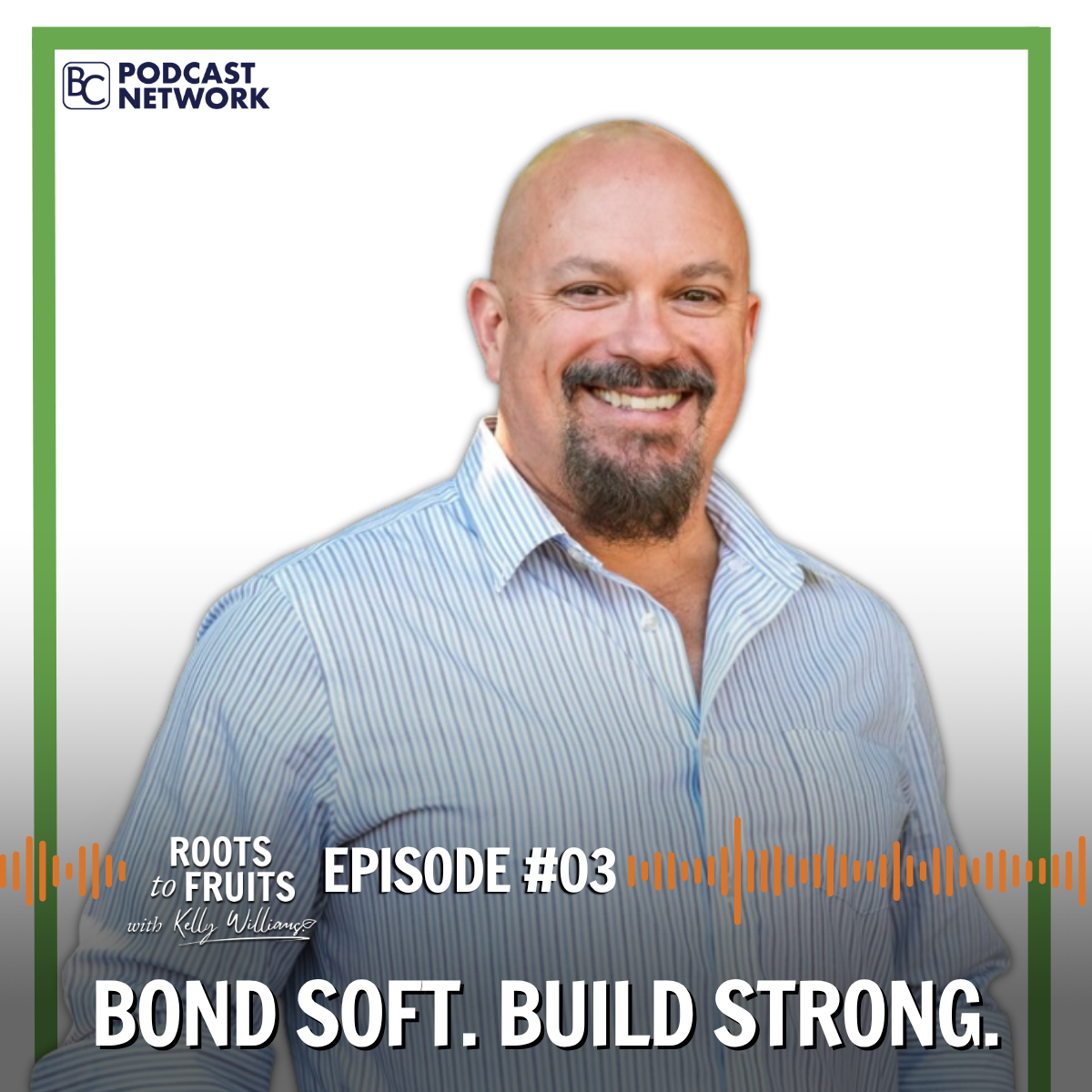
Stuart McDonald has always been one of those people for me.
He and I have both spent years trying to redesign the world of single use packaging.
Pushing, improving compostable solutions, navigating systems engineered for incoherence and extraction, not regeneration.
But Stuart isn't just a packaging mind.
He's a yogi, a surfer, a spiritual human being who carries authenticity in a way that makes the rest of us sit up straighter.
And that's where today's conversation is headed. Yes, we'll most likely talk about materials and brands and the future of waste systems. But we're also going to wander into the territory beneath all of that.
The territory of soft power, coherence, identity, and what it actually means to live a regenerative life.
Because the same systems that create plastics waste also create spiritual waste.
And the same patterns that exhaust our soils, exhaust our nervous systems.
And the same courage it takes to be a regenerative leader is the same courage it takes to live authentically in a world that rewards the opposite.
So today, Stuart and I are going to explore that whole spectrum from soil to soul, from engineering to intuition, from surfing the ocean to surfing the energies of change.
This one's going to be honest, warm and wide open. So let's jump in. My guest, Stuart McDonald, has been in the sustainable materials for the last 15 years, when biopolymers were a niche curiosity to most enterprises.
He currently works for a biotech company headquartered in France, specializing in Enzymes that are deployed into polymer technologies designed to curb our addiction to these fossil based plastics.
His earliest vocation was in the merchant marines as a navigation officer.
This fed his explorer mindset and deep love for the ocean.
It's also where the alarm bells began to ring for Stuart on the extent of the plastic leakage around the globe.
Welcome, Stuart McDonald, to this episode of the Roots to Fruits podcast.
[00:03:46] Speaker A: Really good to be here, Kelly. It's a pleasure. Thanks for having me on.
[00:03:50] Speaker B: Thank you.
So why don't we start with a little bit of that backstory of you, where you grew up, where you've been, where you've traveled. Sure.
[00:03:59] Speaker A: Well, I mean, unsurprising to folks that join the mermaid merchant marine. I'm a prairie boy from Canada, far from bodies of water.
But there's a. And I don't know if it's true about me, but it has been said that kids who grew up on the prairies were really good seafarers because they were accustomed to just these, you know, uninterrupted horizons for their entire life.
[00:04:24] Speaker B: Right, that's interesting. Yeah, I see that.
[00:04:26] Speaker A: But for me, it also satisfied an itch, Right, to explore parts of the world that I had, you know, I, I wasn't, I wasn't exposed to as a kid growing up in the prairies of Canada.
And that was incredibly rewarding and enriching.
Enriching for me just because of the diversity, both in terms of the crew members that I served with, but also the diversity of cultures that I got to experience.
And of course, the geography, you know, when we hit land was always welcome and remarkable.
And I truly did circumnavigate the globe for about 10 years in the service of the commercial fleets that I, that I worked for.
And, you know, to bring this back to sustainability, certainly the peace and calm of the ocean. Right. The awesome power and humbling power of the ocean really did feed my soul. Right.
And you mentioned in the introduction of my introduction, it was also at the same time very alarming and discouraging. Right. To land in ports where there were so much plastic leakage and even worse, you know, thousands of miles from any shoreline, you know, staring off the bridge wing on an early morning or late afternoon and catching in your field of vision, Plastic Kelly, that sort of began, you know, my desire to help rid the world of, or at least curb our appetite for fossil based plastics. Hence my, my, my entry into sustainable films.
[00:06:23] Speaker B: And so what actually got you into sustainable films? Was it a business that you started or was it a company that you worked for what actually got you into from there to you know, the packaging.
[00:06:34] Speaker A: I'll try and keep this short but you know, following the merchant marine I did grad studies in maritime law and that took me to working in industry in the, in, in maritime law.
[00:06:49] Speaker B: And.
[00:06:50] Speaker A: I was working in New York City and I had this great opportunity to go to Canada to open up a, a marine insurance division nationwide. And you know, I'm in my 30s, why wouldn't I take that opportunity?
But at the same time, my brother who had sold a company and had 5 year non compete that prevented him from going back into the industry, I found a small plastics company in, in Canada that specialized in low volume, high margin products. He asked me to join and I'll never forgive him for it, but I did and I began to look for other product lines to augment our current, our current product offering. And I came across a company called Morel Bioplastics which was a joint venture between Archer Daniels Midland and Metabolics. And they were the, that was the first PHA that was approaching any kind of scale.
And, and so you know that was began my exposure to bioplastics which then later expanded into soil biodegradable mulch film. And I then got exposure to and comfort with PBAT based resins which, and a partnership with basf.
And then you know, the landscape started to really expand.
What used to be, you know, basf, there were some PHA early entrants, novamont starch based resins, These were the only players.
[00:08:35] Speaker B: Yeah, it was a very nascent niche market.
[00:08:38] Speaker A: Very much so. And you know, and since that time we've seen new biopolymers come online, PBSA and then combinations compounding became a thing, right? Pvat plus thermoplastic starch plus other modifiers and a real really saw some innovation happening.
[00:09:00] Speaker B: Let me make sure the audience knows what we're talking about. So PHA for those of you that don't know, is a polymer made in the fat cells of microorganisms as they consume for example vegetable oils. So it's as natural of a polymer as it gets. So there's a lot of excitement about its potential because of its marine degradation soil, it's everything degradable.
PVAT is basically like a polyethylene alternative, but a material that is earth digestible versus turns into fossil microplastics. So just to give some people the background and you know, basically what we're trying to do is replace the fossil plastics that are in packaging today. And these are some of the Materials that started that process to where we are now, which I'd love to dig into as well, because I think you would agree technically we've checked all the boxes of performance. That's not what's holding back adoption.
[00:09:52] Speaker A: I agree with that.
And I thought five years ago that we would be farther along than we are right now.
And I think one of the important barriers to entry for whether it's QSRs, quick service restaurants or larger brands who are looking to substitute their, their packaging with something more sustainable to meet whatever goals, sustainability or ESG goals, has been price.
It is by an order of magnitude more expensive than polyethylene or polypropylene, which have been wonderful innovations. They have reduced, they've reduced weight for transportation, they have allowed for food, safe materials to be transported easily and quickly.
It's cheap.
You know, this is 70 years of innovation that we're catching up to as a, as a young industry.
And as a result, we've never been at scale. We've been waiting for that shoe to drop for such a long time.
And as a result it's really expensive to make and it's really expensive to make at low volumes. But what I'm seeing right now, which is really encouraging, is a price compare compression.
The motivations can differ, right? Scale is part of it, but also competitive pressure to keep or capture market share.
Regardless of the motivation, it's here we are closing the delta between maybe not virgin polyolefins, but certainly recyclable plastics. You know, post consumer recycling or chemical recycling.
We're closing the distance between those, making it far easier to adopt. And so that's what gets me excited about the next five years for bioplastics.
[00:11:53] Speaker B: And look it, this is not a journey, this is an adventure because we spend so much time trying to solve technical challenges that couldn't even be fully defined. You know, you look at where brands were with such severely over engineered fossil based plastic packaging that, you know, a bag of chips, as I've said before, you've heard me say before, a bag of chips has no business going to Mars and back and still being right.
But that's what we've designed. So basically packaging has become almost like a way to unitize the economics of food over overproduction.
And it's, it's a difficult thing to reverse from. So we do everything right, we prove all of these technical performances work, they run on machines, they do all these great things. And price, I think in a lot of ways is a hide behind. I think there's a Deeper psychological problem that I want to, I want to dig into with you because we've both seen it together, separately, and that is what's really holding them back isn't technical performance. It isn't price. It's fear.
It's absolute fear, in my opinion. And not just fear, but it's fear across the whole value chain.
So we hear a lot about we need to reduce fear. Reduce fear. I think the real challenge is we have to restore trust between people because our authenticity is at an all time low.
And that's what I've always admired about you, Stuart, is you're authentic.
Your words match your feelings, you don't hide it. So when people do that, our nervous systems pick up on that, that lack of authenticity. And we can apply that same thing to industry. Our industry, I think, is stuck in that same dilemma. I'm curious what your thoughts are on what's holding the industry back psychologically.
[00:13:47] Speaker A: You know, golly, that's, that's a big question.
And I, and I think fear is, is a component of that, you know, and there's some legitimate fear. Right. I mean, products that are purposeful, products that fit compostable packaging are single use, is single use packaging that is protecting food. And, and that's a great.
You use deployment of bioplastics. If it has touched food, then its recycling value is so very low.
But so the fear component for brands might be, and I'm not a brand, but it might be that food safe, food safety is a, you know, is, is a barrier for them to launch at, at large scale.
And it's not valid. You know, we've been working very hard and with large brands as well who have significant R and D budgets to solve for X. Right. Solve for the food safety concern. You need moisture, you need moisture barrier to prevent your food from drying out and you need oxygen barrier to prevent fungus and, and germs to, to grow on your food. We, we've got that figured out in the same way that the polyolefin industry did as well. Right. So the technology better, similar, thinner. Yeah, no, that's true.
[00:15:19] Speaker B: Yeah.
[00:15:19] Speaker A: So that certainly, that's one example that comes to mind for me. You know, a fear about protecting their product, a fear about supply chain. Right. Fear about it lasting the cycle that brands have, I think, you know, imposed upon themselves, which are unrealistic. And that goes back to your analogy about packaging should never be, you know, designed to go to Mars and back.
So should the shelf life or supply chain. Right. That could be compressed as well to.
[00:15:49] Speaker B: Accommodate bioplastics and what you and I both experienced together and again separately over the last, you know, what seven, eight years we've known each other is what is shelf life? You know, brands are still trying to figure out what that means because what they know is that their current product goes on a shelf.
It doesn't go bad, it spends months in distribution before it gets to that shelf. And all that matters is that shelf never goes empty. So there's so much cascading over production from food manufacturing to packaging manufacturing to packaging food manufacturing to cascade it forward to make sure that shelf is never empty because it's such a long path from beginning to end. So I think we got so much waste in the system, no one really knows what's good enough.
[00:16:36] Speaker A: Well, and also the, you know, there are, the larger the brand, the more bureaucratic it may become. And I think of, you know, the legal departments of many brands unwilling to move the goalpost a little bit to accommodate a shorter, you know, a shorter supply chain requirement. But I also think of a brand that I'm, I'm working with right now that has this very, still has maintained a very entrepreneurial, problem solving mindset. And they ain't small, they're, they're privately held but they're a half a billion dollar company now. So they're, they're, they're becoming mature, a mature organization. And yet the philosophy and ethos there's of let's figure it out, right? Let's break stuff. And it has been a tremendous success for them becoming one of, you know, one of the number one brands in, in their space.
[00:17:35] Speaker B: That, that's the challenge, right? We both experience it within the, because the, everybody's getting bigger and that goes against where we need to be going. We need to be distributed localized circularities, managing supply chains, not in some big centralized coast to coast distribution model. You gotta think smaller game.
So when, when they look at, at alternative options, there's, there's so much, it's really easy to be obsessed with all the things that could go wrong or could happen. It keeps people kind of paralyzed yet.
[00:18:10] Speaker A: And, and that, you know, just, I, I want to just carry on with, you know, a point here. We've talked about as an example large CPGs, consumer products groups and smaller and medium sized enterprises.
And I, and I'm, you know, if you talk to me two years ago I was really enthusiastic about large brands taking the risk, making it happen, going first, right? To have fast followers adopt, you know, their technology and that would improve, you know, scale, compress Pricing the world is amazing and we're on our way to sustainable materials in everyday packaging that, you know, there are some macroeconomic pressures on these guys over the last couple of years. Right. You know, inflation, changing consumer demand towards healthier foods. Right. The MAHA movement right now that is encouraging natural flavors and colors right here in the United States. California has moved towards that legislation that demands transit. There is a, there are a lot of headwinds that Prevent bit large CPGs at the moment of, of taking the leap both in terms of cost. Right. And changing the way that they do business or look at packaging. But I am very, very encouraged. Right about the small and medium sized enterprises that, you know, exhibit the attributes that I just described of the brand that I, you know, was previously talking about, which is going to carry us through. Right. The biopolymer industry, which is going through some turbulence right now. I think we're coming into 2026 in a really good spot.
[00:19:55] Speaker B: I think so too. And we're going to get into paper, paper and how that factors into. But I think, you know, one of the challenges is, you know, my estimates, because there's no real hard data, but my estimates are somewhere around 25,000 brands just in the United States alone that are considered small or medium size.
And you've got a reducing number of manufacturers of packaging that are getting bigger. So a $2 billion packaging manufacturer can't take the order for someone who's a $5 million brand.
So you're actually seeing some disconnect between those who want friendlier ecological solutions versus what they can get.
But, but I feel like that's with the larger brands and I want to get your thoughts on this. We know a couple of them that do believe in this and they're doing, they're, they're showing us a lot of truth about ourselves and how they're helping dislodge this momentum. But I think there's, there's another layer to this for these larger brands in that they, for them to take on that they almost need the smaller brands to prove it out like they need somebody else to bring it to market and prove it works because there's too many. But what I think it comes down to is again that, that fear and trust problem that they're going to have with accepting that we can move with, with new material science, they're stuck almost like we're trying to grease the wrong, the wrong tracks to move that forward.
And I don't know, I just, I feel like it comes back to that. There's just Too many reasons to, to say not yet.
But the other point, I was going to say with these regulations, you know, I kind of feel like I'm curious your thoughts on this, that we're kind of going to Europe a little bit in the way. Each state is going to have its own requirements and to be a coast to coast brand, you're going to have to treat each state like a different country that speaks the same language.
[00:21:54] Speaker A: Well, yeah. You know, there's an old adage in the waste management industry that trash is local. Right. And here in the United States. Right. We have 50 little fiefdoms that get to decide what they do from an environmental perspective. Right. We, we have the epa, but which is, which is national.
[00:22:11] Speaker B: Right.
[00:22:12] Speaker A: But states are pretty much able to govern what they're going to do with the waste.
So that's municipal solid waste, msw, that's recyclable material. And then it's also, that's also compostable material. As, as well, some states are more robust than others. California, the Pacific Northwest, Minnesota, the Northeast. Right. New England, you know, are beginning to build systems to take in earth digestible. I love that, I love that expression that you've coined materials. Right. For and, and identified as a, as a proper recyclable material.
[00:22:51] Speaker B: And earth digestible is just, it's because no one, and I think one of the large brands which we can say by name, they're publicly about it. You know them, I know them is PepsiCo. And PepsiCo believes it's. They're not trying to make sure their bags get composted, they're designing for litter. They understand that there's entropy in the system, both human and system, and that you'll never. We can't even design flexible packaging to stay in one piece. We open up a bar wrapper and the corner tears off like we're taking 1.8 trillion units of flexible packaging globally and almost doubling it because we don't even know how to design it to stay in one piece.
[00:23:29] Speaker A: That's a good point. Well, and end of life, you're right. I'm glad you brought that up because that's really important I think for brands when they're choosing a sustainable package, just exactly what is the messaging that they want to give? And most of them want to land on the widest end of life destination possible.
[00:23:48] Speaker B: Yeah. And it's designing for entropy, designing for.
[00:23:51] Speaker A: Escape thanks to the advancing technology, which is light speed. Right. I mean if we think what is of cape, what we're capable of now versus 15 years ago when I started.
We do deserve a lot of credit for what we've been able to achieve in a short period of time. We as an industry and one of those, one of those achievements, one of those innovations is a wider end of life destination for products which includes soil and like backyard compostable and even marine.
[00:24:24] Speaker B: Degradable and even there. So, so this one brand, PepsiCo is kind of forcing the, in the supply chain, the industry to work together to solve these big problems.
And what do we learn from that? We don't play very, we did at the beginning. We didn't play very well together. And I feel, and I always being a yogi, I was excited to have you on as you're a fellow yogi. I use the chakras, I use chakras as both a, a development path but also a measuring tape measure.
So root sacral, you know, you go up to the crown, energy transitions right here in the heart. But we start with root. So by 10 years old your root chakra is formed. So your sense of security, how well you adapt to unforeseen things that happen. Do you adapt with grace and experience or do you fight flee or fawn? Right, sure. Our industry is like a 6 year old.
Our industry NDAs non competes, we don't share information, we're always blacking out names. We're not truthful about what we're doing and why and it creates this lack of trust because we're not transparent. We're always protecting our and it's like why are we protecting pieces of pie when there's not even a pie on the table yet?
So I feel like this, the brand is kind of proving some of the problems that we have in working together as a value chain from, from beginning to the end. There's lack of trust, lack of connection as we're trying to take a strong along extractive line of how we take extract, make, throw away. We're trying to form a circle out of it and wonder why it's not working.
[00:26:01] Speaker A: Yeah, yeah, yeah. We need to interrupt that linear, that linear model to something more regenerative. Regenerative and circular. And I, you know, I want to comment just real quick on non competitive collaboration which you know, you've quickly correctly identified as like key.
I, I saw that for a while and then I'm like seeing a little bit of retreat and I think that might be a byproduct of the technology and innovations becoming more settled. Right. And known and, and the, the traditional impulse or reflex is to protect what you've Made is probably resurfacing a little bit, but it's still there, you know, and it's, you know, folks on the periphery. Right. Have that have a responsibility to share what they've learned in as general a way as possible or as specific as preferable.
[00:26:56] Speaker B: Right, right.
Yeah. And I, I don't know. I just. I feel like until we, we can, you know, package. If you take the entirety of package food, there aren't that many combinations of materials required to do it.
Yeah, we've got millions of combinations of materials.
So I don't know if it's a reluctance to just simplify the game so that we can do the right thing, or it's the, the fact that it's up to the 50 states. The, the 1979 law, the Rick Raw law, the Resource Conservation and Recovery Act, 1979. Congress basically said 50 states, it's your problem.
And I don't see that changing until we have the equivalent of 9, 11, until we have some climate event so powerful that it triggers the Office of Sustainability to be created to normalize this.
I don't see it. I see it being still a very, very much an adventure.
[00:27:55] Speaker A: And I, I look, I think we're. We're not, we're not moving away from any kind of national harmonic harmony or we're not moving. Moving any closer to any national harmonization at all. And we have to live with the reality of that. The, The. The states get. Decide what they do. But more, you know, more and more states are beginning to embrace recycling technologies. Right. To divert waste from landfill. Right.
States that have more land are less likely, you know, than states where land is a premium, like California or the Pacific Northwest, where it's really expensive to have a big hole in the ground.
[00:28:35] Speaker B: That's right.
[00:28:36] Speaker A: So it's. But it's going to be fragmented and policy, Public, Public demand will.
[00:28:46] Speaker B: Will.
[00:28:46] Speaker A: Will be driving adoption as much as the technology will.
[00:28:51] Speaker B: So we have all of these, like, systemic issues. We've got size problems, we've got cascading weights. It just seem. It's very. It. Nauseating. Right. How many things that are. That are in the mix that we're trying to unravel, reshape, reconnect, when at the end of the day, this is still very much a human problem.
And one of the reasons I want to have you on the show is because you are such an authentic human being that I've. I've ever met. Like I said, your words match your feelings.
And, And I know that it's frustrating when you're trying to carry that authenticity forward, you find where there's people you resonate with within the companies you're trying to work with.
So there are companies that absolutely, truly believe in those ethos. They want to be better, they want to be more sustainable, but the equity that owns them is not motivated to do the right thing. So there's a lot of, even the companies that I think really genuinely do or the ones the people that we work with do.
So how do you break through that? How do you carry. And you're a very spiritual person in the sense of individualization, being at peace with yourself, the surrender, all the things we're trained as yogis. You, you embody that. And also being, if I don't mind bringing this up because I think it's really important, being a gay man and a white gay man, Canadian white gay man in American industry, it's tough. Right? So I want to hear some of your, like, what have you learned along the way and how do you carry that spiritual balance with you forward? And how do we get others to, to learn that a lot of what's holding them back is just simply letting their fascia breathe?
[00:30:34] Speaker A: Sure, sure, sure. So we're going there. No, that's, that's great. And, and, and, and thank you for allowing me to speak on the, on this subject. I think at the moment we're talking about authenticity. Right?
That, that, that took a, that took a while for, for me, you know, separating my professional life from my personal life.
In my personal life, I was able to live as an authentic gay man, you know, for, for quite some time. But in my professional life, that took a while.
Certainly, like, in my mind, I, I, I, I feel like I've achieved a measure of, of success professionally. Whether others think so, I don't know. But for me, I think I have.
It has come at some significant personal cost.
You know, for me, there were decades of having to code shift, decades of being in the closet, to climb up the, climb up the ladder.
There were doors that were open that I had to evaluate and decide, oh, gosh, I, I can't go through that because if I am authentic, the opportunity would close for me. So I've, I've made decisions based on the fact that, that have been hard for me, you know, based on the fact that, that I'm gay. But I mean, there, over the course of my professional life, there were opportunities, incremental opportunities to be more authentic. And, and I can say it's a happy ending, right, that I do now get to lead an Authentic life, both professionally and and personally.
And the tragedy, if I could say, is that, you know, I've now learned that by showing yourself your complete self, the world gets to respond with validation about what is true about you. It doesn't always, but when it does, for me, it satisfies this deep personal longing from within to be authentic.
That was a. That was a late revelation for me, but it is what it is. I'm a product of the 90s. You know, I've hired kids now, and I'm around kids, Gen Z, Gen or millennials, certainly in the state that I live in. And some of the states that I've lived in see no barrier to entry, to live an authentic life. And I think that's just amazing. And it's, It's, It's. It's wonderful, right? Absolutely. Get to live.
[00:33:33] Speaker B: Very refreshing, isn't it?
[00:33:35] Speaker A: No, no, no, it truly is. Right. But, you know, it's like old guys like me that had to, had to pave the way a little bit for them. And, and that oral history, and sincerely, thank you for giving me an opportunity to speak briefly on this subject or oral history is. Is pretty important, important for our community to hear.
[00:33:57] Speaker B: And it's.
I, I would. I'm gonna. I'm gonna guess something. You tell me if I'm correct or not, but.
Because I know I can relate to it from. And I can't exactly pinpoint where I felt this energy transition for me personally. But when you, when you are authentic, there's something else that triggers inside of you, which is your coherence because your words match your feelings.
So now when you're authentic, the whole concept of vulnerability changes. You're not being vulnerable, you're just speaking your truth.
And you almost grow taller from it, like weights removed from you when you just surrender to that truth. I'm just being myself. Take it or leave it.
And people appreciate that, I notice more and more it resonates with more people. Authenticity is, I think, a key gateway to, to growth, to. To change, to surfing the ocean. To surfing. The energy of change is authenticity.
[00:34:57] Speaker A: Well, you know, and also, you know, the shoe, the other shoe to drop for me, right, was contentment.
And for me, contentment.
The building blocks of that are passion, love, and integrity. And, you know, you bring up, you know, the love of the ocean. If you. For, for me, passion is a meta emotion. You have to have joy to have passion. And to have joy, I think you have to be a bit vulnerable, right. Open to receive it.
And when you find it, right, the Idea is to repeat it and be in, you know, be willing to repeat what makes you feel joyful.
And that I think is the culmination of what I define as passion. Right. Whether that's passion for surfing or passion for speaking about sustainable materials. Right. And changing hearts and minds in the business space, in our professional endeavors.
That is a passion.
So it's, it that, that's an important factor for me, you know, for contentment. Love, I mean, yes. Love for your partner. And what is that? Maybe that's shared values, right? That's a deep emotional connection. But I also believe that that is, you know, love can, those attributes of love can be, you know, expressed to, to friends and even professional relationships. Right. And that's a key component. And then of course, living in integrity. And integrity is tied to authenticity.
[00:36:39] Speaker B: That's right. Truth. Living your truth.
[00:36:40] Speaker A: Right, Living your truth.
[00:36:42] Speaker B: Because when you live your truth, something else happens, right? You can love yourself and when you love yourself, you're now able to love others and not romantically or that way. I'm talking about that sense of belonging. I think we got the word love wrong.
It's that, that biological drive for harmony and coherence amongst all living things.
[00:37:03] Speaker A: Sure.
[00:37:04] Speaker B: And you don't make that connection when you're masking it with performance and incoherent layers.
[00:37:09] Speaker A: Lack of, you know, I, I, I, I, I, you know, as a, as, as a gay man, you know, and I, I want to talk about what I, I would attribute some of the things that we've talked about as feminine qualities. And I don't mean that disparaging at all, but I mean this ability, right, to forge deep connections, to forge emotional bonds, right. To seek out people with shared values.
When I say feminine, I'm not talking about adopting any gender non conforming roles or painting your nails, right. But it's, it's attracting these attributes and seeking them in others. Right. Particularly, you know, I, I feel for straight guys in a way because they have this like, they're, they're under the weight of this version of masculinity that, that society demands of them. And it's unachievable and quite cruel, right. That anyone, straight or gay, right.
Could be denied like the, the, the true attributes that, you know, make us content and happy and connected to our fellow human beings. Right.
And, and so I mean it, it, I gravitate, you know, to people like you. We, we, we share values and I deeply respect you. And through the course of our friendship over the seven or seven and eight years, I, I feel an emotional bond with you. And that. I think that's, I don't know why I didn't lead with that, but I mean, you're a perfect example of, you know, the love that I feel for another brother. And I, I just think that we need more of that and we need to seek more of that. Right?
[00:38:49] Speaker B: And I feel like there, it's there. I feel like our nervous systems are by. We're biologically engineered for coherence and we're in a world that's, that is discouraging it and it builds up and I call it. It's like, it's like we, we need to compost that residual grief in our souls so we can breathe taller and until we compost that grief into truth. So when you and I share your truth, I'm merely metabolizing it. I'm not judging it. And we tend to judge people's truth versus just simply metabolizing it.
You can say compost. Carbon starts in the compost.
[00:39:34] Speaker A: I love the segue back. Yeah, absolutely.
[00:39:39] Speaker B: Yeah. So I feel like being authentic is the, is the, is, is the contagion that we want.
And I think this younger generation gives me hope.
[00:39:53] Speaker A: And you know, there's a, there's a serenity in authenticity. Authenticity. And I think in management too, you know, particularly with startups in any industry, in any segment of industry and in business, right, there's, there can be chaos and disruption option, right? And if you lead an authentic life, I, I, and, and again, it's, you know, the, the world reflects that back to you. There, There's a possibility, right, for calm, right, and, and, and, and leadership, right? And bringing serenity into the workplace is, I think, critical to a happy and productive crew, right, who are bombarded with chaos and, and uncertainty. And that's, you know, one of the attributes, you know, of, of all business.
[00:40:43] Speaker B: You said something really important, right? There is that even the most content, coherent, authentic person in the world that we live in, you still, there's just those days, you're just weighted down, you know, it's hard to maintain that in today's environment.
[00:41:03] Speaker A: For sure. For sure.
[00:41:06] Speaker B: Yeah. I mean, somehow you got to maintain a. Part of maintaining it for me is the contagion with others, like building that coherent squared, you know, building more.
It gives me hope, keeps me positive.
[00:41:18] Speaker A: Well, I mean, hey, listen, you brought it up. Don't forget, right? Practices like yoga, right. And, and meditation and, and mindfulness, right? Quiet, Quieting the mind, sitting on your surfboard, waiting for the next wave, right? That feeling of up and down with the swell.
I mean, we, we need to seek these out to, to live balanced lives.
[00:41:42] Speaker B: Every moment we have to, to do that. What do we do with it? We fill it with phone scrolls and. Yeah. So, yeah, we're not taking the time to fill the mind. Yes.
[00:41:51] Speaker A: Yeah, yeah, yeah. There has to be. There should be incorporated. And my humble opinion, and you don't have to take my word for it, but there has to be a.
I, I believe for me, right. If I do not incorporate a practice of stillness or meditation. Right.
And I do that in my yoga practice.
I, I'm a real big fan lately of yin, which is, you know, holding onto compressions for five minutes requires, you know, you to focus on. On your body. And that can be very meditative. Right. There's an opportunity for mindfulness in that five minutes.
[00:42:29] Speaker B: And you've been in my hot power class, but you've never been in one of my yin classes. That would be.
[00:42:33] Speaker A: No, I haven't been. And look, for sure, Vinyasa, right. Which is about strength and yin, which is more about mindfulness. Right. These are amazing tools in our toolbox.
I prefer it. Not every. I'm not trying to get people to sign up for a yoga class, but it is, it is, it is beneficial. I mean, just, it's thousands of years of practice.
[00:42:56] Speaker B: It's part of metabolizing the daily grief. Right.
[00:42:58] Speaker A: That's the way I look at it.
Absolutely.
[00:43:01] Speaker B: So you said something.
[00:43:03] Speaker A: And to go back to like, I know we have a theme here, right. These are regenerative practices for us, right?
[00:43:08] Speaker B: That's right.
[00:43:09] Speaker A: Very much, Very much the same as this, as the materials that we've chosen to hitch our wagon to, which are regenerative.
You know, this is, this is about, this is a comparison that I choose to make.
[00:43:22] Speaker B: Yeah, I agree. And I stopped calling. Compost is not the end of life. Compost is where carbon renews. It's the renewal. Indeed. Yeah.
[00:43:29] Speaker A: Great point.
[00:43:30] Speaker B: Something I want to share with you and see what you think of it. I feel like it might be one of something that helps everybody if they realize this about themselves. And no blame, just something to acknowledge about yourself.
I do it and I try, but I do it. When I notice it, when I do it is that when you're talking to somebody and they're sharing their truth with you, there's that. That industry kind of bred in us from the 90s to be performative, to have a really clever response or a smart. Like we're preparing what we're going to say versus being Reverberant and taking the time to process what we just heard, what we just absorbed.
And when those, you see it in people, when you're exchanging with them, are they being reverberant? Are they preparing for being performative?
And when those people come back later, having thought about the, the results of the metabolizing that truth that you shared is always a good sign that of their authenticity.
So I feel like there are some clues and ways to improve ourselves or to improve our interactions with others is to look for that performative, reverberant side.
[00:44:44] Speaker A: Well, and I think, you know, that performative component that, you know, sometimes we can sniff out is insecurity.
Insecurity about you know, the, maybe the, the, the product or the subject, you know, that you're responsible for your, your place in the value chain. Right.
I, I think some experience, right.
And you know, learned experience helps helps minimize that or it diffuses away. Right. We all have, I have insecurity. Right. It shows up for me sometimes as well as well in our, one of our defenses is to be, you know, performative and mask that. But the more your lived experience, the more you've been a part of the industry that, that you're in, it's seniority, right. It takes some time and it becomes, you know, less performative and more authentic.
But I think time, time is a factor there.
[00:45:48] Speaker B: I'm curious what you think of this. I feel like there's so many people out there, whether it's their job, in their jobs, in their roles, what they're being asked to do is essentially carry out what their nervous systems would consider to be incoherent actions.
And it weighs on them. So there's a lot of performative people that aren't, that are just trying to survive in the incoherent system that they've been placed in that their raw coherent energy is about belonging. So that empathy, that feminine side that they want to be a part of, something greater than themselves is there, but they can't express it. It's locked away through the performance of the expectations for whatever they're role is. So I feel like there's just a lot of coherent bodies stuck in incoherent conditions.
Indeed.
[00:46:36] Speaker A: And you know, maybe that's just a fact of life in the professional position that they're in or the vocation that they're in. And you know, listening to you describe that and there's, there's truth in that for me, I began to think about, well, you know, the balance that we need to have in our Lives, right. There's the, the job that we go to nine to five or however, the time consuming that it is, it's, it's really important to find balance in that, in your personal life so that you can come back to work, reset, but also you can leave it at work when you come home and, and, and, and, and reset. And so some activity to help you get back to equilibrium I think is really important. And for me again, it's meditation.
[00:47:25] Speaker B: Right, it's, and, and so, so you were, you, you didn't grow up a surfer, you grew up on the plains. So when did you start surfing? Exactly. When did, when did that happen?
[00:47:34] Speaker A: Yeah, I used to live in New York.
My in laws have a beach house on long island about 12 miles away from one of the most iconic surf longboard surf spots in Montauk at the very east end of, the very east end of Long Island.
And I had, I was in my 40s, early 40s when I took like two weeks off of work, which was unheard of for me. It was always these bite sized chunks and we'd come out for the weekend, right. It's a two and a half hour train ride away from Manhattan.
But so then I decided, well, in these two weeks I'm going to learn how to surf. And I got a coach.
Corey's wave was the name of the surf school and they're still in existence, so shout out to them. They got me surfing and that began, you know, a lifelong love affair. And it's, it's not hard. It's not hard. Anyone who gets on a board for the first time and stands up, pops up, is hooked.
And so that really like took on, that took on a fanaticism when I moved to Los angeles and I'm 23 minutes away from my current, you know, home break.
[00:48:53] Speaker B: Love it.
[00:48:53] Speaker A: And now it's, now it's just, it's, it's I, it's incorporated in my, in my daily routine. I, I will say just kind of fun. Like I, I love, I love to surf early in the morning. I love to be the first one, you know, in the lineup. Dawn Patrol.
I can't do that working for the French now because it's the end of their day at the beginning of mine, right? So, you know, working for the French has really messed with my morning routine, but I will find the time to, to do it and then, you know, from that has given me some ability to, you know, go to other surf spots around the world, Latin America, you know, Asia.
So I seek it when I Have time to find it.
[00:49:37] Speaker B: You know, you hear a lot of talk about the word mindfulness, and I think everyone has a different interpretation. But essentially, you found your balance of mindfulness, something that keeps you sane, keeps your nervous system regulated, keeps your hrv, your heart rate variation is high and controllable. I mean, that's what we have to do because it is a tough world, and it's a lot of scary stuff going on, and our nervous systems are not designed for what we experience and see on a daily basis. So we got to find some way to keep electrically balanced, you know?
[00:50:08] Speaker A: Well, well, make no mistake, it didn't come naturally to me. It. It's a skill, and. And skills have to be practiced and incorporated, and I'm not perfect, man. It took me a long time, and I. I meditated today for the selfish reason that I wanted to be somewhat, you know, ready for you. But there are days that go by and I don't. But when I don't do it, I realize I show. I. I show up differently.
[00:50:33] Speaker B: And.
[00:50:33] Speaker A: And so that's, for me, right? I mean, meditation could be gardening, right. Meditation could be pruning flowers. Meditation could be walks. Meditation can be a lot of different things. It doesn't necessarily mean sitting in the lotus position, but it. But it. There are practices where you get to settle your mind and calm your mind.
[00:50:54] Speaker B: It's moving meditation, right? You're moving meditation. Yep.
[00:50:58] Speaker A: Absolutely.
[00:50:59] Speaker B: And I feel like a lot of people are missing the opportunity to experience that because they always have earbuds in.
So podcasts are great. Music is a great tool to decompress and get to a new place, but sometimes we just need stillness, right? And nothing is better than to find yourself stuck between thoughts with nowhere to be.
And what happens, right? Things come to you.
You figure things out when you quiet the mind.
[00:51:31] Speaker A: Yeah. And it. You know, for me, you know, my worst enemy is myself, right? My ego, right?
By. By. By meditating, right? I. I move away from that, right? That this, myself is my own, is my worst enemy, right? By meditating, you get a little awareness, right? You get a little distance, you know, from that. And you just get to be quiet. Quiet that lizard brain. That downstairs brain. Right?
[00:51:59] Speaker B: Quiet that lizard brain. Yes.
[00:52:00] Speaker A: That's.
[00:52:02] Speaker B: Yeah.
[00:52:03] Speaker A: Yeah. I.
[00:52:03] Speaker B: You know, I just.
I was. What I'm hoping people get from this episode is that we're all wired for coherence. Your nervous system is wired for what you and I have every time we meet. It's like we saw each other yesterday, and. And it's so fulfilling. My nervous system is fulfilled when I interact with people like, like you, Stuart. And, and I think it's because of that authenticity. And I don't think anybody would, would openly admit that they have no interest in being that I think everybody wants to be.
[00:52:39] Speaker A: Absolutely.
[00:52:39] Speaker B: So hopefully they can take a few things away from this episode to try. And if, and if not, you know, I'm easy to find. Kelly Williams me. You can, you can email me, you can reach out to me multiple ways, follow me on the podcast, the YouTube channel, and again, easy, easy to find and find out more about how to create your own path to authenticity.
So any, any last thoughts or comments or, or things to share with the audience?
[00:53:07] Speaker A: Well, no, I, I, I, other than, you know, I appreciate your introduction and allow me to return the favor.
Iron sharpens iron.
And for me, the sum, for me, the sum of me are the people that I surround myself with.
You are one of those people that enriches my lives. And I look at you just on a number of different planes as a spiritual mentor and as a subject matter expert that has no equal in our industry.
It's truly a pleasure to spend any, any time with you. And so I do appreciate, you know, the invitation to join. I wouldn't have missed it. And I just wanted to express gratitude and a sincere thank you for allowing me to spend some time with you today.
[00:53:57] Speaker B: Thank you. That means a lot to me, Stuart. It really does. And something I'm going to do for you, just, I haven't done it yet, but I'm going to start doing some chakra meditation. So maybe when I'm ready, I'll, I'll give you one. One and see.
[00:54:09] Speaker A: Throw them my way. Throw them my way.
[00:54:13] Speaker B: Well, with that, Stuart, I can't thank you enough. Like I said, you, you're reverberant, you're authentic, you're a genuine human being. And I, and if more people modeled themselves after you, we would be a much happier, safer place. So with that, I'm honored to have you on.
Much appreciated. And go hit some waves today sometime.
[00:54:34] Speaker A: Today's a bad day, but I will say one last thing. It's been raining here, right? So the rule of thumb is don't go in the water for three days because it is Los Angeles county and lots of stuff flowing out there, lots of stuff dumping into the water. But thanks for the encouragement. I'll take you up on that as soon as possible.
[00:54:55] Speaker B: And we'll end like we usually do. Bond soft, build strong. I am your host, Kelly Williams, with roots to fruits podcast. Thanks for tuning in to Roots to Fruits.
If this conversation resonated, subscribe wherever you.
[00:55:08] Speaker A: Get your podcasts and share it with.
[00:55:10] Speaker B: Someone who's ready to grow with us.
[00:55:12] Speaker A: Let's build something lasting together.